
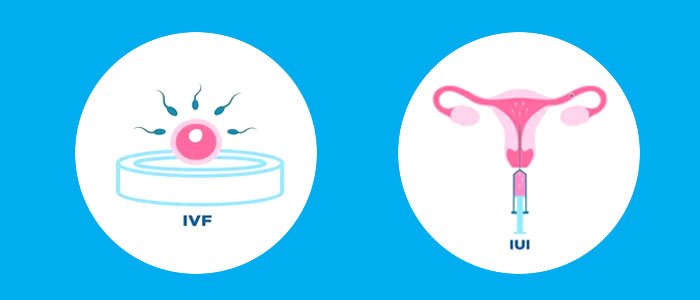
Medical advancements in reproductive
medicine have transformed infertility, as these remedies have given hope to
couples who are unable to conceive. There are various assisted reproductive
technologies (ART), and some of the most common and effective ones include
Intrauterine Insemination (IUI) and In Vitro Fertilisation (IVF). The two
processes involve bringing forth fertilisation and pregnancy, but are very
different in their complexity and use. IUI is a low-intervention method during
which the sperm is actively inserted into the uterus. In contrast, IVF is
needed when the eggs are fertilised with sperm in the laboratory outside the
body before implanting the obtained embryos into the uterus.
Key indications for considering IUI or IVF:
Unexplained Infertility:In situations where a particular factor is not identified through conventional means of diagnosis, both IUI and IVF are applicable. IUI is commonly a first-line therapy, as it is less invasive, and IVF may be adopted as an option when the IUI cycle has not proven to be successful.
Male Factor Infertility: Both of the procedures can deal with male infertility. IUI works in mild to moderate abnormalities of men, because it concentrates sperm and puts them closer to the egg. IVF, seeded in particular by the use of intracytoplasmic sperm injection (ICSI), is very effective in severe male factor infertility, such as low sperm count, poor motility, versus abnormal morphology.
Ovulatory Dysfunction: IUI can be used in conjunction with the use of ovarian stimulation in women who have already failed to get results with ovulation induction based medicines and have a history of irregular and/or absent ovulation. IVF is a treatment option for when there are more complicated ovulation disorders or when other treatments don't work.
Tubal Factor Infertility: In case a woman is the owner of obstructed or scarred fallopian tubes, the inability to carry an egg and sperm to meet, the treatment of choice is IVF. IUI does not come in handy in such a situation because it involves open fallopian tubes, where fertilisation takes place in the body.
Effects of undergoing IUI or IVF:
Improved chances of pregnancy: Both procedures increase the chances of conceiving among couples who experience infertility. The success rates of IVF and IUI tend to vary depending on the complexity of each case. However, the former is usually associated with high chances of success per cycle, particularly in difficult instances.
Treatment of Certain Fertility Conditions:The given technologies offer a dedicated approach to various fertility problems that men or women might have without the ability to conceive a child naturally.
Emotional and Economic Burden: The experience with IUI and IVF is torturous since it gives hope, due to reliance upon results, changes in hormonal levels and disappointments, especially after the processes. Both procedures are costly, especially IVF, which needs a lot of funding.
Risk of multifetal pregnancies: A well-known one, most often with IVF (but even after IUI because certain women are high responders to ovarian stimulation), is the increased risk of multifetal pregnancy (which means twins, triplets, etc.). This is more dangerous to both the mother and the babies, although couples prefer it.